
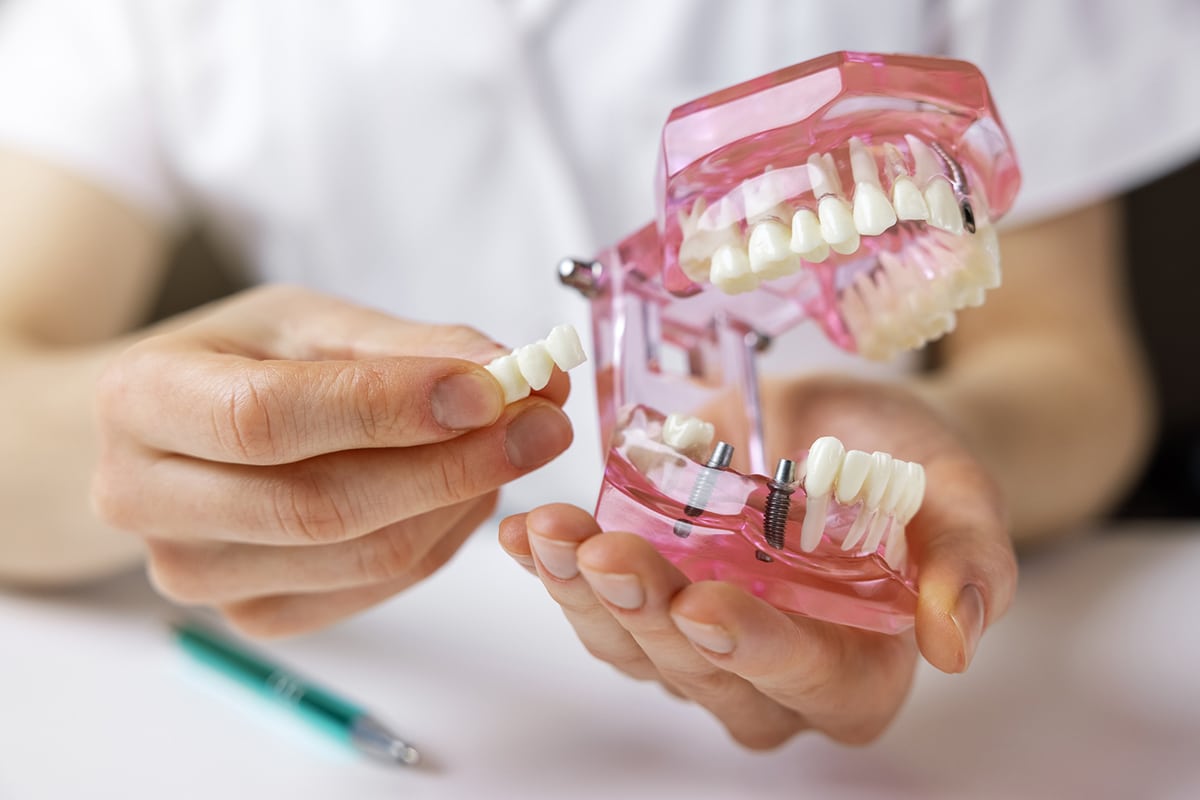
When it comes to replacing lost teeth, you have multiple viable options. Two of the most popular tooth-replacement options we offer are dental implants and bridges. While these both replace missing or lost teeth, they differ significantly in lifespan and oral health benefits.
This blog shares why you should always replace missing teeth, explains the differences between dental implants and bridges, and helps you decide which option is best for your smile.
Lifespan of Implants vs. Bridges
As long as the dental implant integrates well, an implant can last decades or possibly a lifetime with careful maintenance. The crown on top may need to be replaced every 10 to 15 years due to normal wear and tear.
A dental bridge may only last for 5 to 15 years, and when it wears out, we will need to replace the entire appliance. Over time, an implant will be a significantly better value than a bridge.
Reasons to Replace Missing Teeth
If you have a few missing teeth, you may believe that replacing them is a luxury. Many patients who have one or two missing teeth choose to live with the gaps in their smile. However, if you choose not to replace your lost teeth, you could face significant oral health challenges in the future.
Your jawbone may recede, causing facial changes and ageing your appearance. Your teeth may shift and become crowded, or develop additional gaps, increasing the likelihood of tooth decay. The longer you live with a gap in your smile, the more likely you are to experience oral health issues.
If you do not replace missing teeth, you may feel self-conscious and reluctant to smile. Others may make mistaken assumptions about your character. Maintaining a complete smile makes it easier to interact with others. When you are ready, we can fill the space with a new dental implant or bridge to restore your natural smile.
What Sets Dental Bridges and Implants Apart?
Dental Bridges
A traditional dental bridge requires you to have healthy teeth on either side of the gap. We will place crowns on these abutting teeth to support the artificial tooth, called pontics. A bridge rests on top of the gum. It provides a complete smile and improved chewing and speech.
Pros:
- More affordable upfront than dental implants
- Faster process to replace your missing tooth
- Can replace up to three teeth in a row
Cons:
- Short-lived compared to dental implants
- Must place crowns on teeth adjacent to the gap, potentially weakening them
- Food and debris may catch under the bridge, making it challenging to keep the teeth and gums clean
Dental Implants
Pros:
- Last significantly longer than dental bridges of any type
- The dental implant integrates with the jawbone, creating a solid base for your restoration
- Easy maintenance, requiring no more daily care than natural teeth
- While a traditional implant replaces only one tooth at a time, implant-supported dentures can replace an entire arch if needed.
Cons:
- Surgical placement means that some patients may not be eligible for implants (especially patients with uncontrolled diabetes or other conditions impacting healing)
- The process takes longer than getting a bridge; a bridge only takes a few months, while a traditional dental implant may take longer, depending on whether preparatory procedures like bone grafts are needed.
- Implants cost more up front, but are a better value for the cost over time
Deciding Between Dental Implants and Bridges
Making this decision can be a challenge. It may depend on financial or practical considerations. Health and wellness could also play a part. We can help you break down the decision between these two tooth replacement options when you come in for a consultation. Share your concerns with our doctors and we will provide guidance.
Frequently Asked Questions About Dental Implants
How much extra maintenance and oral hygiene does a dental bridge require?
Cleaning a dental bridge takes longer than cleaning a single implant. You must use special tools, such as floss threaders and interdental brushes, to reach under your bridge and remove any food or plaque. If you have trouble maintaining your oral hygiene, an implant may be a better option.
Between implants and bridges, which option is better for my oral health?
Implants are better for overall oral health. Since they replace both the tooth and the root, they preserve jawbone health and have a more stable fit. Since they are so much easier to keep clean, they do not promote dental decay in the way a bridge might if you do not practice excellent oral hygiene.
What is the success rate for dental implants?
Dental implants succeed about 95% of the time with proper maintenance and care. Occasionally, patients experience an infection called peri-implantitis which could endanger the appliance. Watch out for signs of infection, gum recession, and discomfort and report them to us immediately.
How do I maintain my dental implant to help it last longer?
Keep your implant clean with the same care you give a healthy natural tooth. Brush, floss, and see us at least every six months for regular cleanings.
Our team at Stonington Dental Associates and Frenchtown Dental Associates is ready to help you complete your smile. We can answer your questions about dental implants and bridges and help you decide which option is best for you. Contact us to schedule your consultation today!